
Kitchen Layout Mistakes That Hurt Function
Kitchen Remodeling in Colorado Springs, CO: Layout Tips
Your kitchen looks beautiful in the photos. The cabinets are exactly the style you wanted, the countertops gleam, everything coordinates perfectly. But when you're actually cooking dinner, you're doing an awkward shuffle between the sink and the stove. Your partner can't help because there's barely room for one person to work, let alone two. The island you insisted on blocks the natural path from the living room to the kitchen, so everyone squeezes past it constantly.
Beautiful doesn't mean functional.
The layout determines whether your kitchen works or just looks good. Get the measurements wrong by even a few inches and you'll spend years frustrated by a space that should make your life easier. We see this constantly in Colorado Springs homes where homeowners prioritized aesthetics over workflow, then discovered too late that their dream kitchen creates daily aggravation.
After designing kitchens here for over 35 years, we've learned which layout mistakes cause the most problems and, more importantly, what actually makes a kitchen work for how families cook and gather today.
Mistake #1: Ignoring the Work Triangle (or Zones) Completely
The work triangle connects your sink, stove, and refrigerator in a layout where each leg measures 4 to 9 feet apart. When these points are too close together you're cramped. Too far apart and you're walking across the kitchen repeatedly to make a single meal.
The strict triangle works for one cook, but most families have multiple people in the kitchen at once. That's why modern layouts use zones layered on top of the basic triangle. Create a prep zone with sink and cutting boards, a cooking zone around the range, and a cleanup zone near the dishwasher. A separate coffee station keeps morning routines from interrupting dinner prep.
When you're planning your kitchen design, start with the triangle as your foundation, then add zones that match how your household actually uses the space.
Mistake #2: Not Leaving Enough Space Between Counters
The difference between a kitchen that flows and one that feels like a traffic jam often comes down to a few inches. Homeowners measure their space, see they can technically fit an island or additional cabinets, and squeeze them in without accounting for how much room people actually need to move and work.
Walkways (non-working passage areas):
- Minimum: 36 inches
- Comfortable: 42 inches
- Perpendicular intersections: one walkway must be 42 inches
Work aisles (where you actually cook):
- One cook: 42 inches minimum
- Multiple cooks: 48 inches (non-negotiable for families)
- Always measure counter edge to counter edge, not cabinet fronts
The reason these numbers matter is appliance doors. Your dishwasher extends 21 to 24 inches when you're loading it. The oven door juts out 20 inches or more. Refrigerator doors swing wide. If your aisle is only 38 inches, someone standing at the sink blocks the fridge completely. Countertops overhang cabinet fronts by about an inch on each side, so what looks like 42 inches between cabinets becomes 40 inches of actual floor space.
Proper kitchen cabinet placement requires planning for people and appliances, not just making everything fit on paper.
Mistake #3: Island Sized Wrong for Your Space
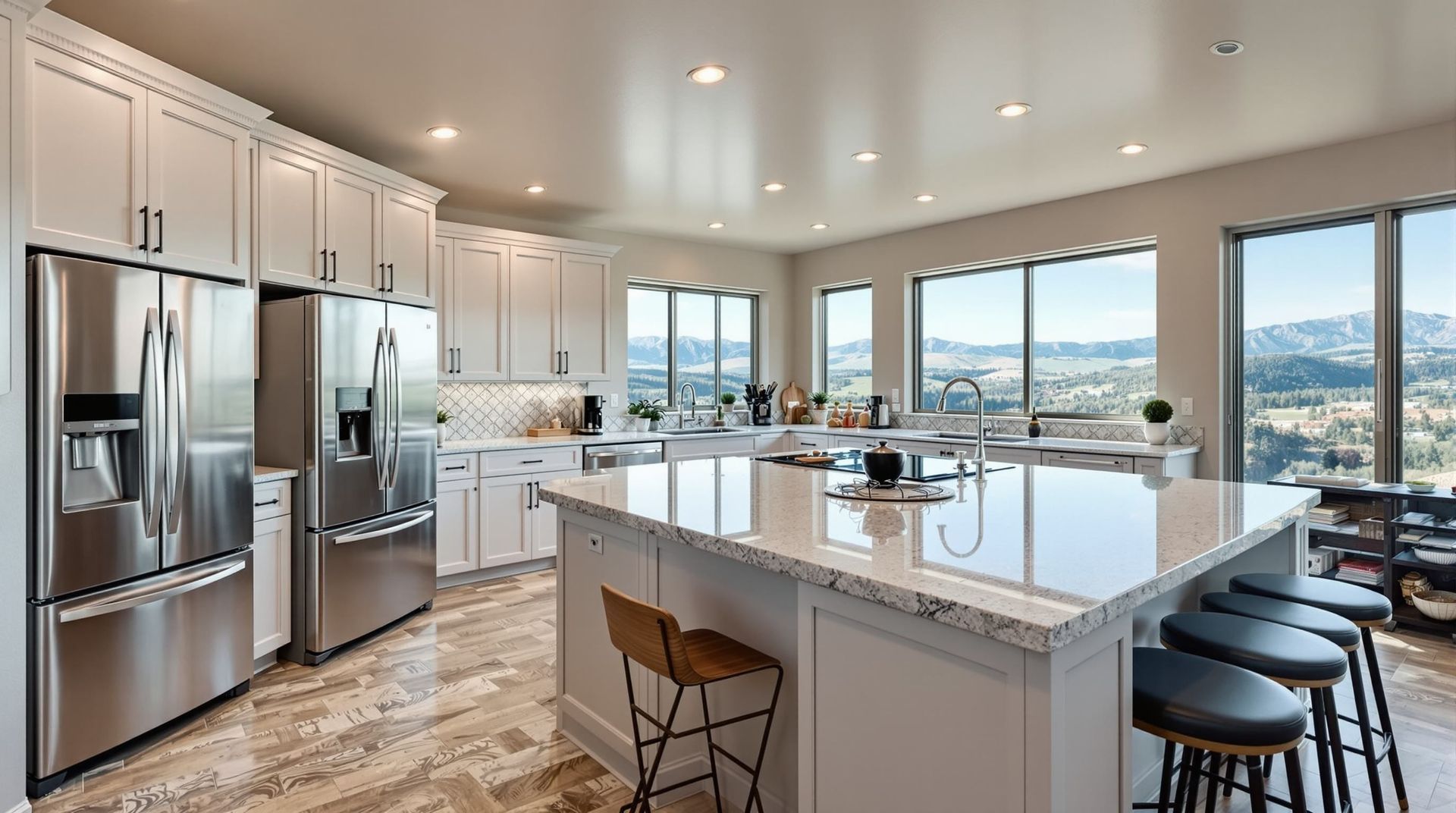
Islands are the most requested feature in kitchen remodels, and the most common source of regret. Homeowners see a gorgeous oversized island in a magazine and assume it will work in their kitchen. It doesn't. An island that's too big blocks traffic, prevents appliances from opening properly, and turns your kitchen into an obstacle course. Too small and it wastes the opportunity for extra storage and workspace.
Clearance around all sides:
- 36 inches absolute minimum (creates bottlenecks)
- 42 inches comfortable for normal use
- 48 inches ideal for busy kitchens or main traffic paths
Behind island seating:
- No traffic passing: 32 inches minimum
- Light traffic to edge past: 36 inches
- Main walkway for walking behind: 44 to 48 inches
- Measure from the overhang edge where people sit, not the island base
The bigger problem is location. An island placed in the wrong spot cuts through your work triangle, blocks the natural flow from living room to kitchen, or sits too close to the refrigerator so the door can't open fully. Sometimes a peninsula attached to existing counters works better than a freestanding island, especially in smaller or galley-style kitchens.
If you're questioning whether an island fits your space, it probably doesn't. Visit our showroom to see properly sized islands in context, or work with our team on your kitchen remodeling project to determine what actually works in your layout.
Mistake #4: Poor Traffic Flow Planning
The kitchen becomes the household highway whether you plan for it or not. The problem is when main traffic patterns cut directly through your work zones. Kids walking from the front door to the backyard shouldn't have to navigate around someone cooking at the stove. Guests entering from the dining room shouldn't block access to the sink. When the refrigerator sits deep in the cooking zone, every snack run interrupts whoever's preparing meals.
Think about how people actually move through your home. Where do they naturally walk? How do kids access the kitchen after school? Where do guests gather during parties? Open concept layouts make this worse because the kitchen flows directly into living and dining areas, so it becomes the natural gathering spot even when cooking is happening.
The fix is creating a perimeter path that bypasses the work triangle. Position the refrigerator and pantry at the edge of the kitchen so people can grab what they need without entering the main cooking area. Add a separate beverage or coffee station away from prep zones. Leave a clear walkway around the outside that lets non-cooks move through without crossing your workflow.
Mistake #5: Inadequate Counter Landing Zones
Landing areas are the spaces next to appliances where you set things down. Without them, you're balancing hot pans on counter corners or setting groceries on the floor because there's nowhere else to put them.
Minimum landing areas:
- Refrigerator: 15 inches on the handle side
- Cooktop: 12 inches on one side, 15 inches on the other
- Sink: 24 inches on one side, 18 inches on the other
- Oven: 15 inches beside it (or within 48 inches across from it)
If two appliances sit next to each other, take the larger landing zone requirement and add 12 inches. That combined space serves both without wasting counter real estate.
The total recommended counter space for a functional kitchen is 158 linear inches. Most people underestimate how much surface they need once you account for appliances, landing zones, and actual prep area. When you're selecting kitchen cabinets and layout, plan for these landing zones before finalizing a design that looks beautiful but leaves you nowhere to work.
Conclusion
Layout mistakes make beautiful kitchens frustrating to use daily. The right clearances, proper work triangle or zones, correctly sized islands, and smart traffic planning turn your kitchen into a space that functions efficiently for multiple cooks.
Plush Designs has been creating functional kitchens in Colorado Springs for over 35 years. We measure your space, map your workflow, and design kitchen remodeling projects that work for multiple cooks without bottlenecks or daily frustration.
Visit our showroom or call 719-578-0001 to discuss your layout concerns.