
Storage-First Kitchen Design for Modern Homes
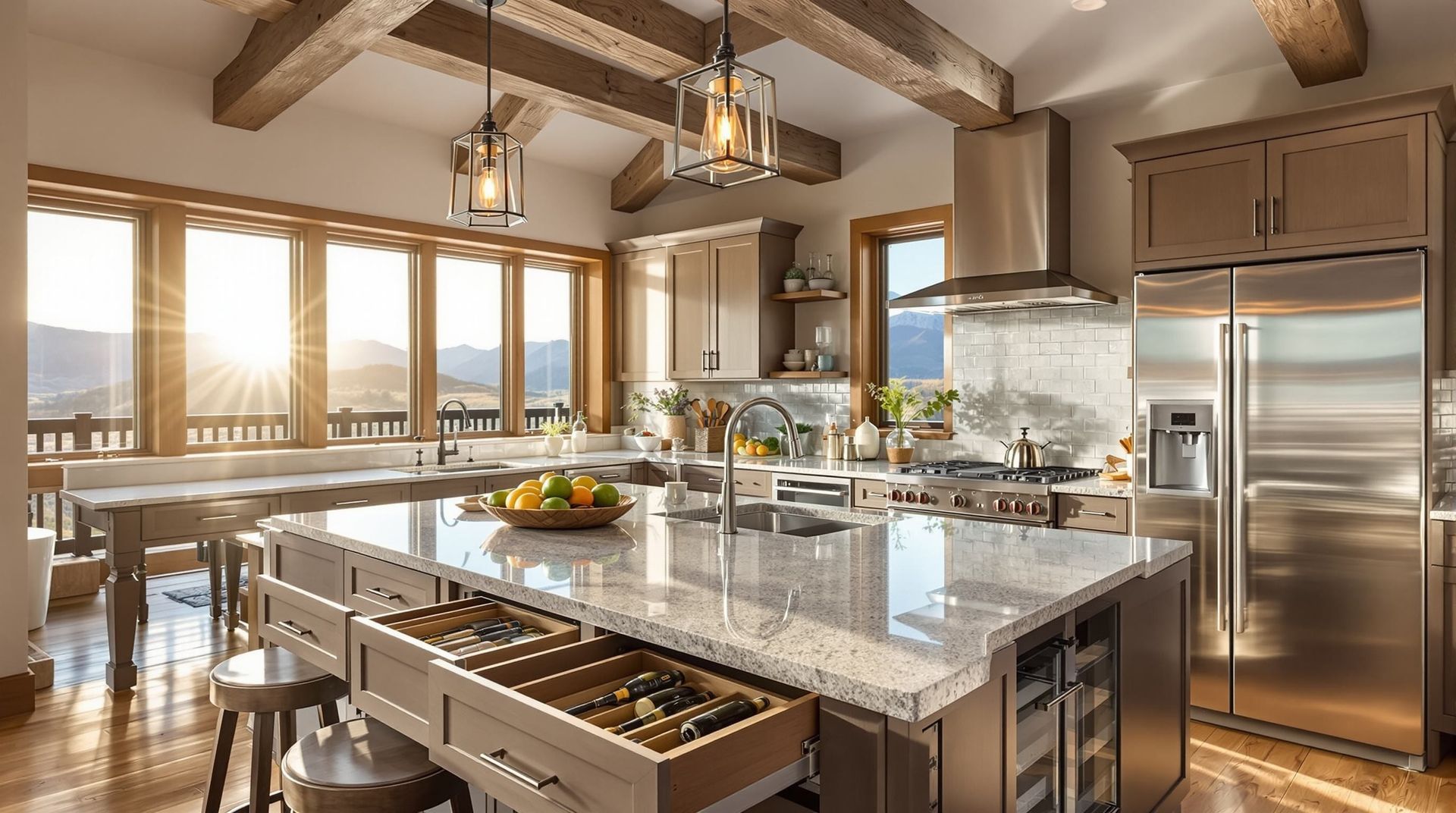
Kitchen Remodeling in Colorado Springs, CO: Storage Design
Quick take: Here's the thing about kitchen storage: it's the difference between a kitchen that looks good and one that actually works. In Colorado Springs homes, especially those built between the '70s and '90s, smart cabinetry and pull-out shelves can completely change your daily routine. You don't need more square footage. You need better planning.
A kitchen can look beautiful and still feel frustrating to use if the storage is not planned well. In many Colorado Springs homes, the problem is not space, it is how that space is organized. When cabinets and pantries are not designed around real daily habits, clutter builds up, appliances take over the counters, and the kitchen starts working against you instead of for you.
In this blog post, you will find simple, practical ideas to make your kitchen easier to live in. We will cover smart storage solutions like pull out shelves, deep drawers, and custom pantry options, along with what to expect in terms of cost and timeline for a storage focused remodel in Colorado Springs.
Why Modern Kitchens Still Feel Cluttered
Open-concept kitchens are everywhere in newer Colorado Springs homes. But somehow, they still feel crowded. It's not about square footage, it's about planning.
When storage is an afterthought, your counters become permanent homes for mixers, air fryers, mail piles, and snack bins. Most kitchens rely on base cabinets with fixed shelves. They look fine on paper, but in real life, you're crouching down, stacking things, and the back half of each cabinet becomes a black hole.
We also store way more than we used to. Bulk grocery runs, specialty appliances, reusable containers, kids' lunch gear, it all needs a place. Without pull-out shelves and better layout planning, even a 2,200 square foot home can feel cramped.
Good storage design starts with a simple question: where does everything live, and can you reach it easily every day?
Design Around How You Actually Use Your Kitchen
Effective kitchen storage design starts with how you actually use your kitchen, not with cabinet catalogs. Before we begin planning kitchen cabinets for a home in Colorado Springs, we walk through daily habits with homeowners. Where do you prep? Where do kids drop backpacks? Which appliances stay plugged in? These answers shape the layout more than square footage ever will.
One of the most practical approaches is zoning your storage:
- Prep Zone: Knives, cutting boards, mixing bowls, and trash pull-outs within 36 to 48 inches of your main prep surface.
- Cooking Zone: Pots, pans, and spice racks stored near the range, ideally in deep drawers rather than stacked cabinets.
- Cleanup Zone: Trash, recycling, and dish storage near the sink and dishwasher.
- Snack Zone: Lower drawers or pantry sections accessible to kids without disrupting the cook.
When your pantry follows this logic, you stop crossing the kitchen three times to gather ingredients. Even in a 2,000 square foot home, thoughtful zoning can free up 20 to 30 percent more usable storage without adding a single cabinet. Good storage feels invisible. You stop noticing clutter because everything has a home.
Deep Drawers vs. Traditional Cabinets
Standard base kitchen cabinets are 24 inches deep with one fixed shelf. Sounds spacious. In reality, you stack pots, baking dishes, and small appliances, then unload half the cabinet to grab what you need. That friction adds up.
Deep drawer systems solve this. Instead of reaching into a dark box, you pull everything toward you. Full-extension pull-outs can extend 18 to 22 inches. Quality drawer slides handle 75 to 100 pounds, easily supporting cast iron or stand mixers.
Here's what changes:
- Pots and pans drawers: Wide drawers prevent stacking and scratching. Dish drawers: Plates stored vertically near the dishwasher cut down unloading time.
- Spice racks in drawers: Keep spices visible instead of hidden behind tall bottles. Trash pull-outs: Concealed bins stay within 12 to 24 inches of the sink.
- Storage becomes ergonomic. You're not kneeling on tile to find a lid. Everything moves toward you at waist height. That comfort matters as much as how things look.
Don't Ignore Vertical Space
In many Colorado Springs kitchens, upper cabinets stop 12 to 18 inches below the ceiling. That gap collects dust and forces you to use step stools or decorative baskets for overflow. It looks finished, but it wastes space.
Extending cabinets to the ceiling increases storage by 10 to 15 percent without expanding your footprint. Stacked upper cabinets let you store seasonal items, large serving pieces, or appliances you don't use daily. Tall pantry cabinets (84 to 96 inches high) eliminate dead corners and narrow filler spaces. Pair them with pull-out shelves, and they function like an organized pantry, not a deep closet.
Full-height cabinetry also improves visual balance. It draws the eye upward and makes kitchens feel more intentional. In a storage-first design, height isn't decorative. It's a functional space that keeps counters clear.
Hidden Storage Keeps Countertops Clear
Modern kitchens look clean in photos but feel crowded in real life. The difference is concealed storage. In a storage-first design, the goal is to eliminate permanent countertop residents by giving everything a designated home behind cabinetry.
Appliance Garages
Appliance garages sit on the countertop but hide small appliances behind lift-up or pocket doors. When designed right, they include outlets inside so coffee makers, mixers, or blenders can stay plugged in without visible cords. This keeps frequently used items accessible while maintaining a clean backsplash.
Placement matters. Appliance garages work best within 12 to 18 inches of prep space so you can pivot from storage to use without crossing the kitchen. In open-concept layouts, this prevents the island from becoming an overflow zone.
Pull-Out Pantry Shelving
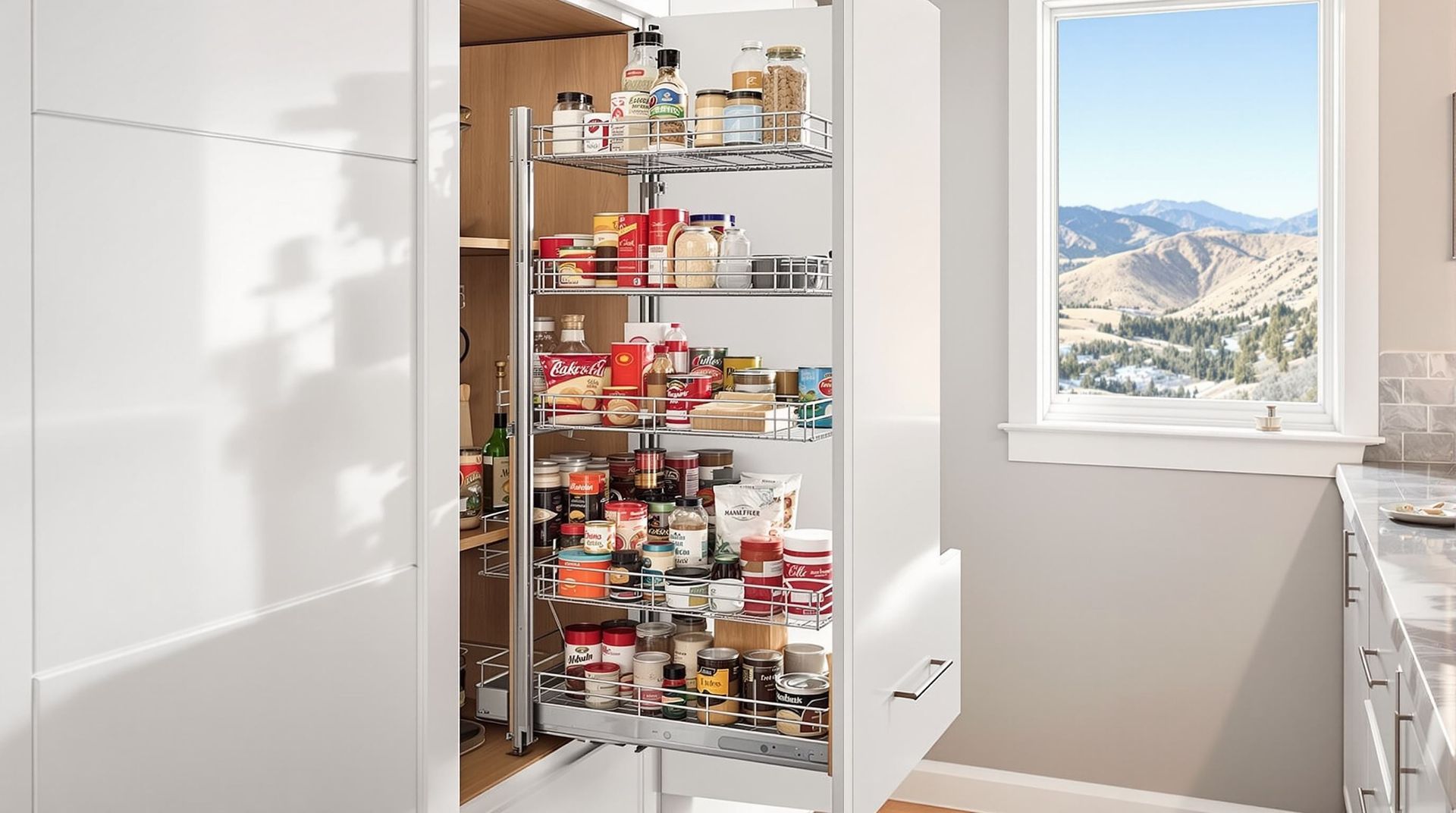
Traditional pantry shelves are 12 to 16 inches deep and fixed. Items get pushed to the back and forgotten. Pull-out shelves let the entire shelf extend forward (18 to 22 inches, depending on cabinet depth). You can see inventory at a glance and reduce food waste.
Full-height pantry cabinets with adjustable pull-outs can increase usable storage by 20 percent or more compared to fixed shelving. For families who buy in bulk, this structure lets heavier items sit securely without stacking. Less bending, less digging, faster meal prep.
Integrated Spice and Tray Storage
Spice racks get cluttered because bottles vary in height and size. Integrated spice drawers solve this by storing bottles flat or slightly angled inside shallow drawers near the cooking zone. With drawer depths of around 3 to 4 inches, every label is visible at once.
Vertical tray dividers (usually 9 to 12 inches wide) keep baking sheets, cutting boards, and platters upright instead of stacked. This prevents scratching and eliminates the need to unload heavy items to reach the one in back.
Concealed Trash and Recycling
Freestanding trash bins take up floor space and interrupt kitchen flow. Concealed pull-out systems integrate bins into base cabinets, usually within 12 to 24 inches of the sink. Soft-close hardware ensures smooth operation even with frequent use.
Many systems include dual bins for trash and recycling, and some expand to three compartments. Keeping waste hidden reduces odors and visual clutter while staying accessible.
What Storage Upgrades Actually Cost
Storage-focused upgrades change how a kitchen functions, but they do affect cost. In Colorado Springs, most storage-forward kitchen remodels fall between $25,000 and $60,000, depending on cabinetry scope, layout changes, and materials.
1. Drawer Systems and Hardware
Standard base cabinets with fixed shelves cost less than full-extension drawer systems. Upgrading to deep drawers with soft-close, heavy-duty slides typically adds several hundred dollars per cabinet. Quality slides rated for 75 to 100 pounds cost more but prevent sagging and failure over time.
Replacing most lower cabinets with drawer bases can increase cabinetry costs by 10 to 20 percent. But the tradeoff is accessibility and daily comfort. For many homeowners, being able to reach everything without kneeling justifies the cost.
2. Custom Pantry Solutions
A basic pantry cabinet with fixed shelves is the most economical option. Adding adjustable pull-outs, built-in dividers, and specialty organizers increases cost based on materials and hardware. A tall pantry cabinet with multiple pull-outs can range from a few thousand dollars to significantly more, depending on whether you choose semi-custom or fully custom cabinetry.
Custom pantry organization makes the biggest difference in busy households. Bulk grocery storage, dedicated snack zones, and visible shelving reduce waste and streamline meal prep. It adds upfront cost but improves daily functionality.
3. Full-Height Cabinetry
Extending cabinets to the ceiling requires more materials and installation labor. Taller cabinets (84 to 96 inches high) cost more than standard 30 to 36-inch uppers. In some homes, crown molding or ceiling adjustments may be needed.
That said, the added vertical storage increases usable space by 10 to 15 percent without expanding the footprint. For homeowners looking to avoid an addition, investing in height is often more cost-effective than increasing square footage.
4. Layout Changes
Reconfiguring the layout to improve storage zones may involve moving plumbing, electrical lines, or gas connections. Even minor shifts in sink or appliance placement can add several thousand dollars. Structural modifications, like removing a partial wall to create a larger pantry run, increase costs further.
Layout changes represent the largest budget variable, but they often deliver the most meaningful improvement in long-term functionality.
Storage Design and Resale Value
Buyers in Colorado Springs pay attention to storage. With median home values around the mid-$400,000s in many neighborhoods, expectations have shifted. Walk-in pantries, full-height cabinetry, and organized layouts are baseline expectations in move-in ready homes, not luxury features.
A kitchen that looks modern but lacks thoughtful storage can feel unfinished during a showing. Open shelves filled with small appliances or overstuffed pantries signal limited functionality. In contrast, a kitchen with deep drawer bases, concealed trash systems, and dedicated pantry organization feels calm and intentional. Buyers equate that organization with overall home quality.
Storage-first design helps older homes compete without requiring a major expansion. Even modest layout refinements and upgraded cabinetry can improve daily livability while aligning with what today's buyers expect.
Storage improvements also carry over into other spaces. When homeowners invest in thoughtful kitchen planning, they often apply similar principles to adjacent spaces like mudrooms or even their bathroom designs, creating consistency throughout the home. That cohesion can positively influence resale perception as much as square footage.
Well-planned storage doesn't just organize belongings. It positions a home as practical, updated, and ready for modern living.
Conclusion
You don’t need more space to improve your kitchen. Better planning makes the difference. When storage is designed around your daily routine, with deep drawers, pull-outs, and well organized pantries, your kitchen becomes easier to use and far less cluttered.
A storage-first approach helps you get more function from the space you already have, creating a kitchen that feels simpler, more efficient, and built for everyday life.
Wondering how much storage your kitchen could really have? We’ll review your space, identify problem areas, and design cabinet and pantry solutions that fit your routine and your budget. Contact us today or visit our showroom to start planning a kitchen that works better every day.